Technical material reference

Read the stone before specifying it

Compare named stones and geological families by composition, mineral hardness, source-bounded absorption, British weather exposure, care and established uses.
Reference only: no entry is a stock list, offer of supply, physical sample or record of work completed by this atelier.
Reference diagram — not a stone sampleThe diagram carries no evidence of colour, grain, veining, finish, source or availability.

How to read the data

Four boundaries keep comparison honest

Mineralogy helps explain likely behaviour, but specification values must come from representative tests on an identified source. Historic repair also requires physical, chemical and mineralogical compatibility.
Names are not specifications
Record the geological and commercial name, quarry, bed or quarry face, block or batch, finish and supplier. Historic England advises matching chemical, physical and mineralogical properties for repair.
Mohs is a mineral scale
Calcite 3, feldspar 6 and quartz 7 describe relative scratch resistance of minerals. They are not whole-stone abrasion, strength or frost values.
Absorption figures are bounded
Every number on this page is tied to the named product or test sample and method. It must not be transferred to another bed, quarry, block or finish.
UK exterior use is conditional
Rain, saturation, freeze–thaw, salts, thermal cycling, orientation, thickness, joints and drainage act together. “Outdoor suitable” is not a family-level property.

Visual references

What stone families can look like

Illustrative stock and public-domain images of stone variation and source context. None is an approved sample, current stock, finish or proof of supply; natural stone varies.
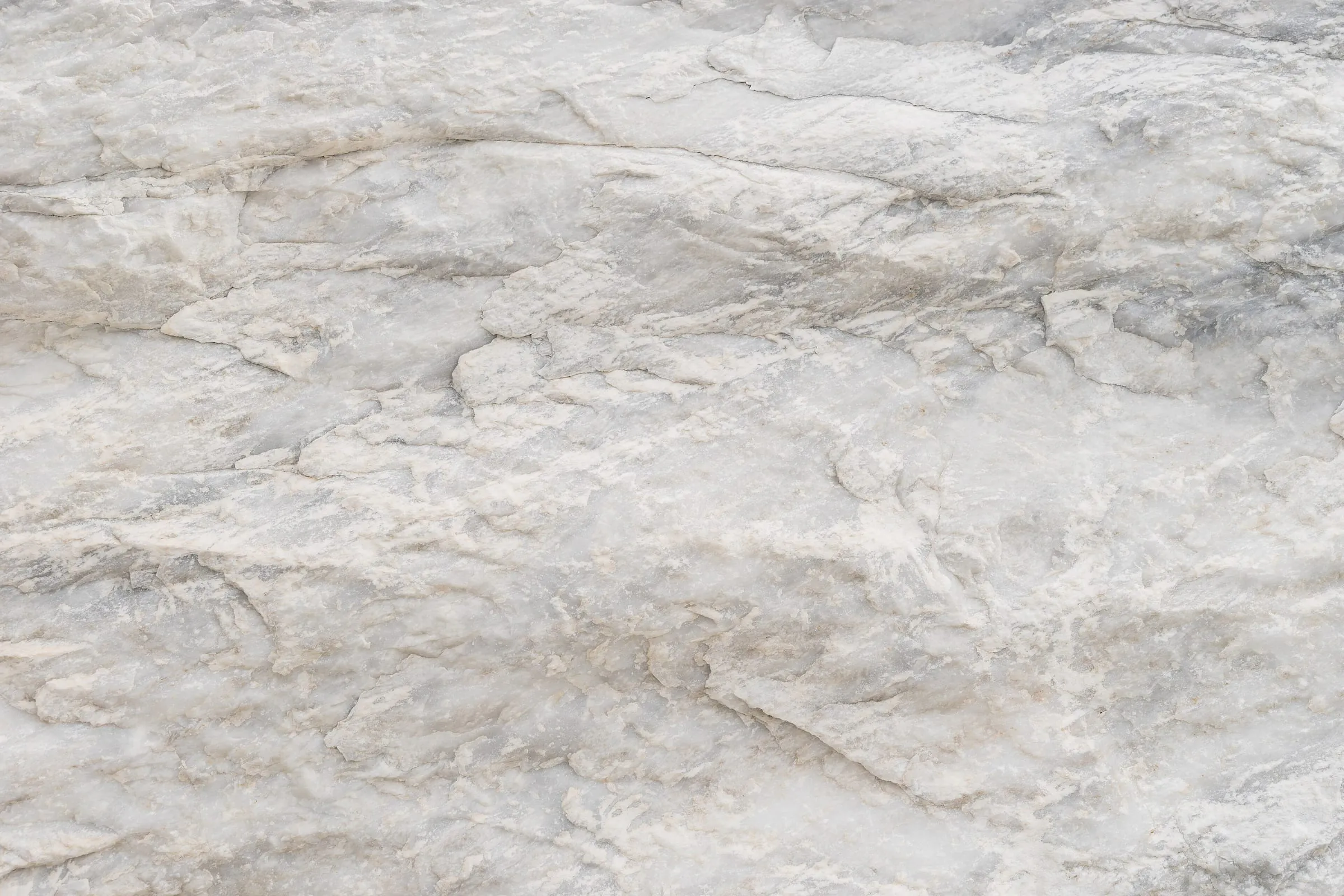
Close material-reference photograph of white Kymi marble from Euboea, showing natural surface variation at hand-sample scale.
Illustrative CC0 material reference of Kymi marble — not our sample, current stock, approved finish or proof of supply; natural stone varies.“Marble Kymi Euboea Greece” by Jebulon, via Wikimedia Commons (CC0 1.0). Local copy resized and converted to WebP.
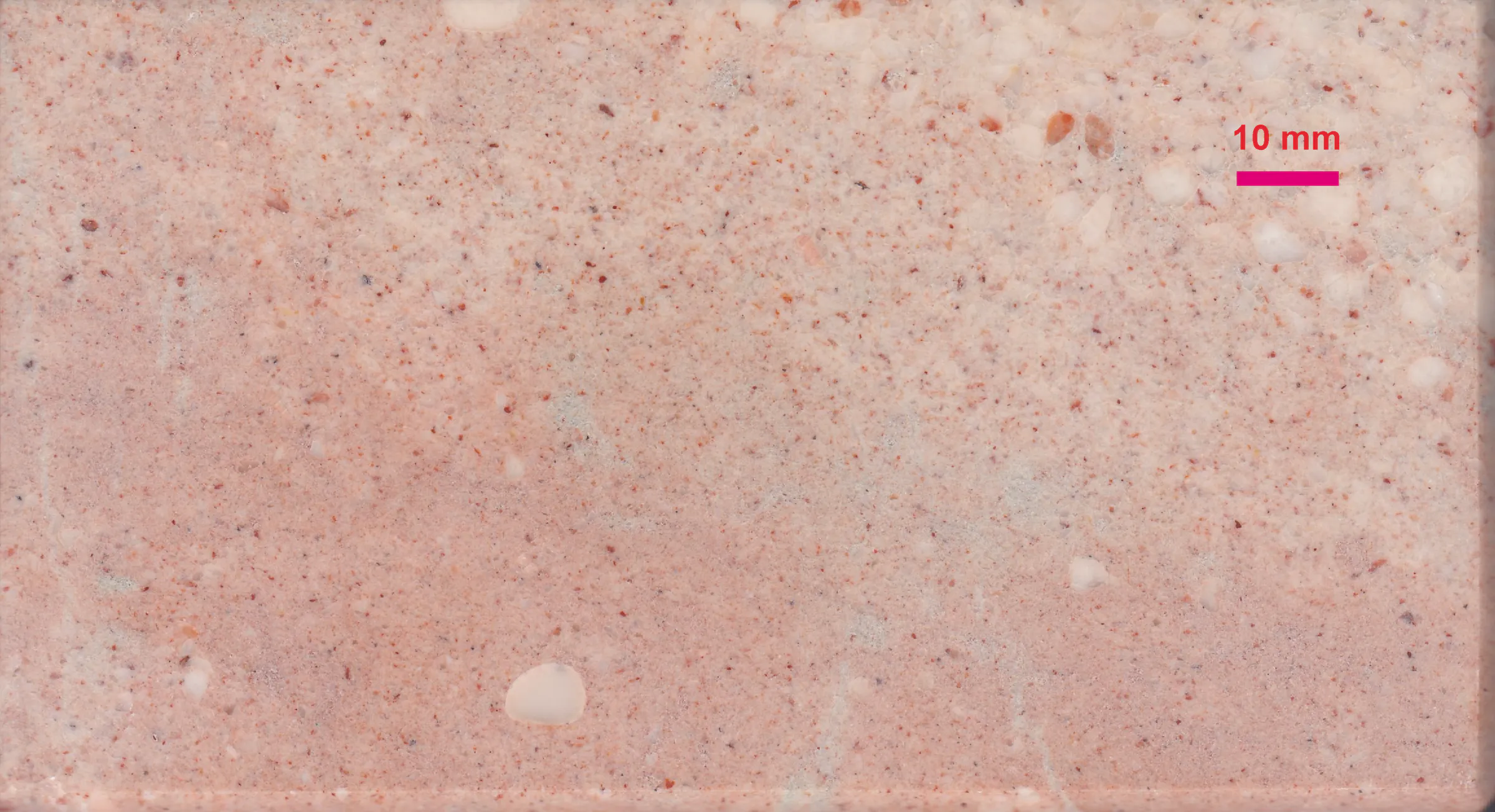
Macro material-reference photograph of Cretaceous Untersberg limestone, commercially called Untersberg Marble, with a 10 mm scale bar.
Illustrative CC0 macro reference of Untersberg limestone — not our sample, stock, approved finish or proof of supply; the source image includes a 10 mm scale.“Untersberger M2” by Lysippos, via Wikimedia Commons (CC0 1.0). Local copy resized and converted to WebP.
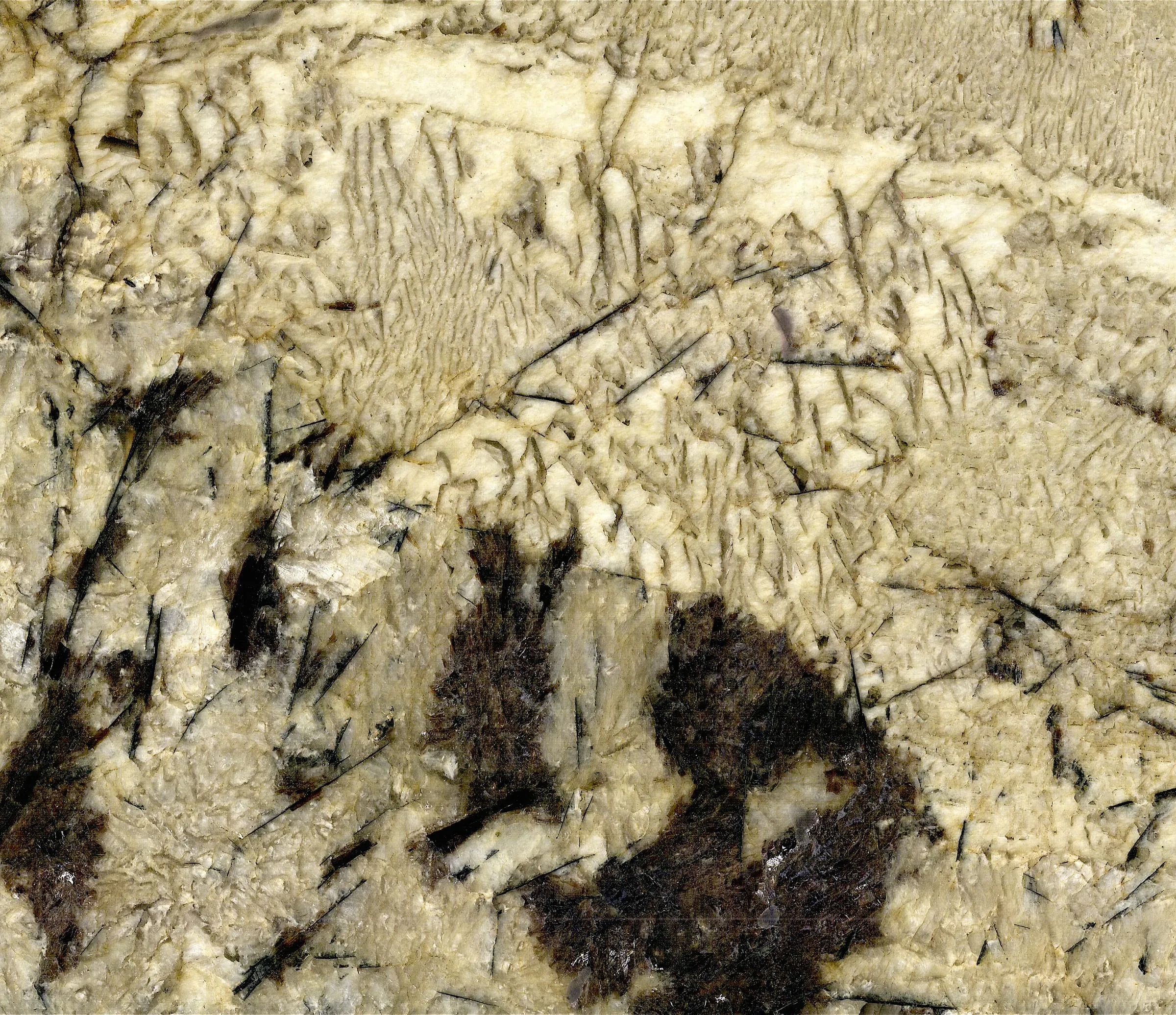
Macro material-reference photograph of Amazon Gold graphic granite from Brazil, showing feldspar, quartz and dark mica at slab-detail scale.
Illustrative CC BY material reference of Amazon Gold graphic granite — not our sample, stock, approved finish or proof of supply; natural stone varies.“Amazon Gold Granite (graphic granite) (Brazil) 4” by James St. John, via Wikimedia Commons, licensed under CC BY 2.0. Local copy resized and converted to WebP. (source, CC BY 2.0)
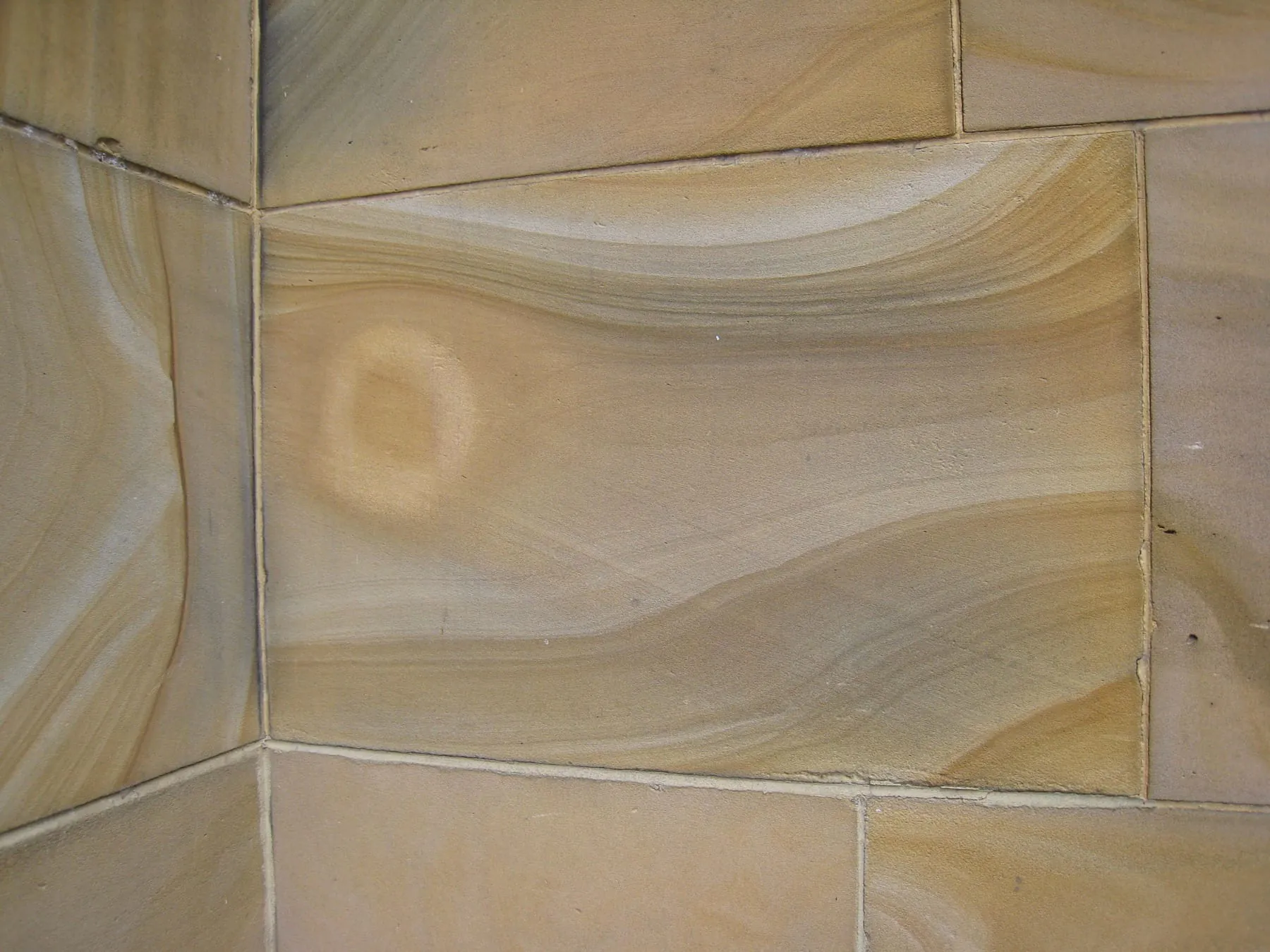
Close material-reference photograph of sandstone ashlar at the University of Melbourne, showing bedding and joints at masonry-block scale.
Illustrative CC0 sandstone masonry reference — third-party building fabric, not our material sample, supply, installation or completed work.“Sandstone Texture” by cogdogblog, via Wikimedia Commons (CC0 1.0). Local copy resized and converted to WebP.
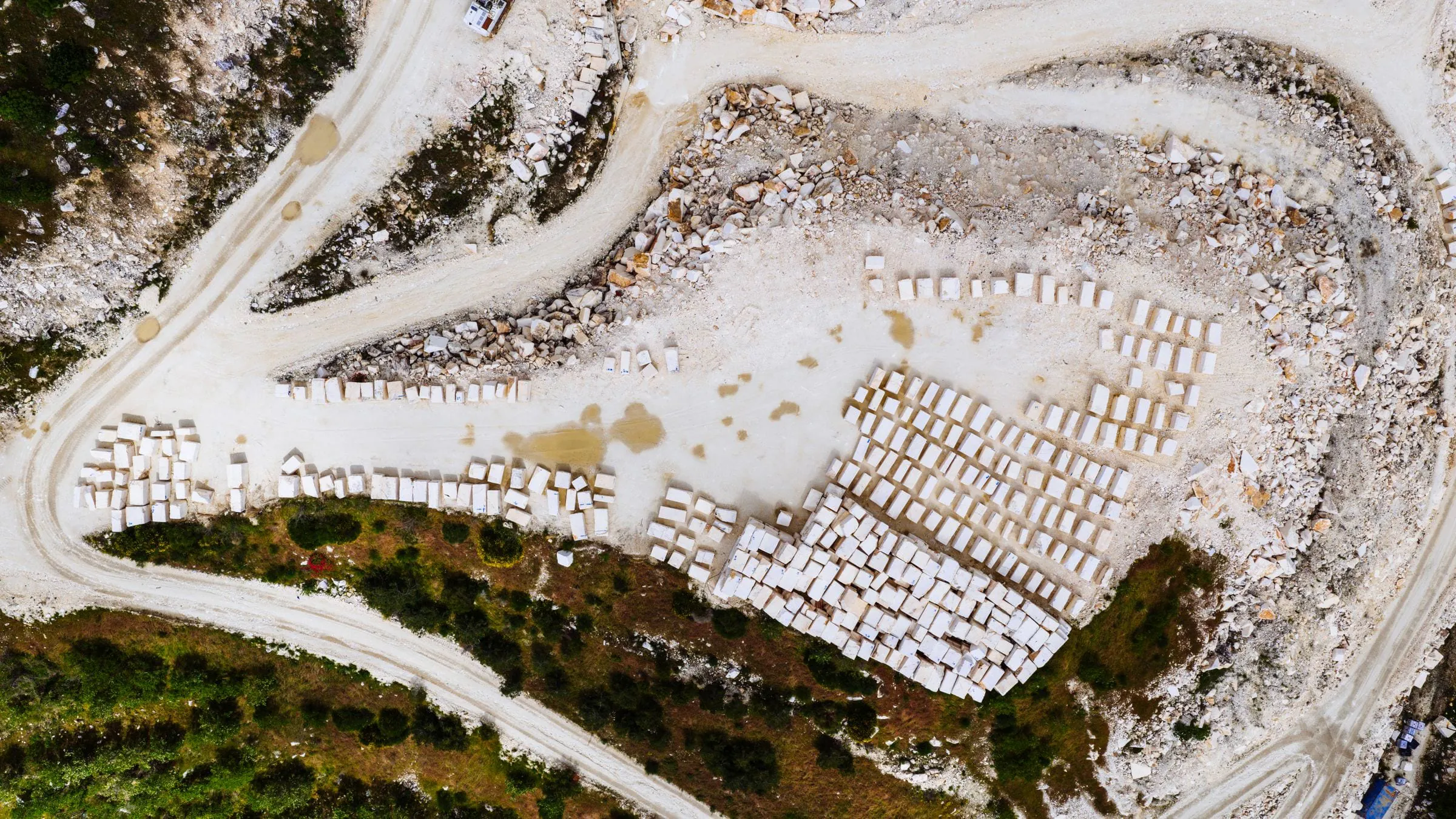
Aerial stock photograph of a marble quarry near Thessaloniki, showing extracted blocks at quarry scale.
Illustrative Pexels stock photograph of a Thessaloniki marble quarry — not our quarry, supplier, source, stock or supply-chain evidence.Photo by K (@kelly) on Pexels; used under the Pexels License. Local copy resized and converted to WebP.

Named British stones

Regional names still require a quarry and bed

These names describe established building-stone traditions, not uniform commodities. Published figures below belong to the identified supplier product or historic test sample.
01

Portland stone

Upper Jurassic oolitic and bioclastic limestone

Stone from the Portland Stone Formation, particularly the Isle of Portland. Whitbed, Basebed and Roach are distinct beds and must not be treated as interchangeable.

Mineral composition
Calcite-rich oosparite: ooliths with shell and echinoderm fragments in sparitic and micritic carbonate; the cited Heritage product also records minor quartz and open voids.
Hardness
Calcite is Mohs 3. Minor quartz is Mohs 7, but that does not give the whole rock a Mohs value of 7; Mohs is a mineral scratch scale, not a stone acceptance test.
Water absorption
Heritage Portland Stone: 5.85% by mass average, with 3.16–9.76% lowest/highest expected values from 133 tests to BS EN 13755.Published reference
UK exterior exposure
Conditional, with a long UK service record. The Heritage Whitbed sheet reports flexural results after 14, 56 and 168 freeze–thaw cycles and advises detailing that sheds rainwater. Confirm the proposed bed, section, exposure and current declaration.Published reference
Maintenance
Inspect joints, drips and runoff routes; prevent persistent saturation. Use the least aggressive cleaning method after a trial area, avoid acids and high pressure, and obtain stone- and soiling-specific advice.
Typical uses
Ashlar, façades and cladding, mouldings, carving, monuments, internal flooring and, where the selected product is declared for it, external paving.
02

Bath stone

Middle Jurassic oolitic limestone

Freestone from the Chalfield Oolite Formation around Bath and Corsham. Quarry and bed names matter: Top Bed and Base Bed products have different porosity, strength and exposure guidance.

Mineral composition
Fine- to coarse-grained ooid limestone with sparry calcite cement and little matrix; the Stoke Ground Base Bed product is classified as oosparite.
Hardness
The dominant calcite mineral is Mohs 3. This indicates scratch sensitivity only and does not replace abrasion, strength or frost testing of the stone.
Water absorption
Stoke Ground Base Bed: 8.6% by weight to BS EN 13755, with 20.7% open porosity by volume to BS EN 1936.Published reference
UK exterior exposure
Conditional by bed and detail. The cited Base Bed is declared at 56 cycles to BS EN 12371 and is promoted for exposed details; that result must not be transferred to another Bath stone or bed.Published reference
Maintenance
Keep copings, cornices and joints draining; avoid cement-rich repairs that trap moisture. Clean only after identifying soiling, use non-acidic products and trial the proposed method.
Typical uses
Ashlar walling, restoration, carved and moulded work, cornices, copings, fireplaces and internal flooring, subject to the selected bed.
03

Ancaster stone

Middle Jurassic oolitic and bioclastic limestone

Lincolnshire Limestone traditionally worked as Weatherbed, Hard White and Freestone. Historic BRE guidance records materially different weathering behaviour between beds.

Mineral composition
The Goldholme sample is classified as biosparitic limestone with ooliths and fossil fragments in coarse sparite cement; staining identified calcite in constituents and cement.
Hardness
Calcite is Mohs 3. A product’s dense fabric may improve wear or weathering, but does not change the mineral-scale scratch reference.
Water absorption
Goldholme/BRE sample: 4.2% by mass to BS EN 13755. Historic BRE Weatherbed Blue: 3.82% by weight. Historic BRE Hard White: not determined.Published reference
UK exterior exposure
Bed-specific confirmation is essential. Historic BRE guidance describes Weatherbed Blue as suitable for all but the most exposed locations with careful water shedding, while Hard White has limited weathering and salt resistance. The cited sheets do not provide a transferable current freeze–thaw declaration.To be confirmed by testing
Maintenance
Record the bed and bedding orientation, keep projections and joints dry by design, monitor salt and edge decay, and use low-impact non-acidic cleaning after trials.
Typical uses
Ashlar and walling, carved details, mouldings, restoration, fireplaces and selected paving or flooring where the exact bed and finish are supported.
04

Cotswold stone

Regional family of Jurassic oolitic limestones

A regional description covering limestones from several formations, quarries and beds. The reference value here is for Guiting Gold and is not a Cotswold-wide average.

Mineral composition
Guiting Gold is oolitic limestone with ooliths, bioclasts and intraclasts in coarse carbonate cement, notable quartz grains and minor iron minerals that contribute to its warm colour.
Hardness
The carbonate framework is principally calcitic, so Mohs 3 is the relevant dominant-mineral reference; quartz grains are Mohs 7.
Water absorption
Guiting Gold: 9.6% by weight to BS EN 13755, with 25.7% open porosity by volume to BS EN 1936.Published reference
UK exterior exposure
Conditional and product-specific. Guiting Gold reports 56 cycles for masonry and cladding flexural testing after 14 freeze–thaw cycles. Drainage, bedding, thickness and exposure still require review.Published reference
Maintenance
Preserve breathable, compatible joints; prevent saturated ledges and trapped runoff. Allow natural patination and use gentle, trialled, non-acidic cleaning rather than routine aggressive washing.
Typical uses
Walling, ashlar, architectural masonry, carving, landscape work and repair where colour, texture and physical compatibility have been checked.
05

York stone

Regional and commercial family of Carboniferous sandstones

“York stone” is not one quarry product. The technical reference below is Crosland Hill Hard York Stone, a fine- to medium-grained Millstone Grit sandstone.

Mineral composition
Sandstone grains commonly include quartz, feldspar and mica, compacted and cemented together. Exact grain and cement proportions require petrography of the offered York stone.
Hardness
Quartz is Mohs 7 and feldspar Mohs 6; whole-stone wear also depends on grain bonding, cement, pores, bedding and finish.
Water absorption
Historic BRE Crosland Hill reference: 2.4% by weight, with 8.6–9.2% porosity and a 0.60–0.68 saturation coefficient.Published reference
UK exterior exposure
The cited Crosland Hill sheet records 14.3 MPa flexural strength after freeze–thaw and assesses the product as durable for paving, masonry and cladding. Do not transfer that conclusion to an unnamed York stone.Published reference
Maintenance
Lay and detail with the correct bedding orientation, keep joints and falls draining, remove organic growth gently and avoid indiscriminate sealing or high-pressure cleaning.
Typical uses
External paving, steps, setts, kerbs, walling, cladding, landscape features and heavily trafficked floors where finish-specific slip data are supplied.

Named Italian marbles

White appearance does not equal one performance

Carrara and Statuario are commercial and geographical selections within marble. Veins, grain fabric, quarry face and block can change strength and weathering behaviour.
06

Carrara marble

Metamorphic carbonate rock from the Carrara district

A broad geographical and commercial family with multiple grades and quarry faces. The numerical reference is Bianco Carrara C/D from Marmi Carrara’s Lorano quarry.

Mineral composition
The cited C/D marble is predominantly calcitic, with dolomitic crystals in veins plus minor muscovite, rare quartz and disseminated pyrite.
Hardness
Dominant calcite is Mohs 3. Vein minerals can differ, and a polished finish remains vulnerable to acidic etching even when water absorption is low.
Water absorption
Bianco Carrara C/D: 0.11% mean at atmospheric pressure to EN 13755; 0.3% mean open porosity to EN 1936.Published reference
UK exterior exposure
Project-specific review required. The cited product reports 17.2 MPa mean flexural strength dry and 14.4 MPa after 48 frost cycles, but marble can also lose strength or bow through moisture and thermal cycling. Assess carving thickness, veins, fixings, exposure and EN 14066 evidence.To be confirmed by testing
Maintenance
Blot spills promptly; use pH-neutral, non-abrasive products. Avoid vinegar, citrus, descalers and acidic masonry cleaners; agree whether etching and patina are acceptable before selecting a polished finish.
Typical uses
Interior floors and wall linings, stairs, bathrooms, fireplaces, vanity tops, sculpture and carefully assessed exterior work.
07

Statuario marble

White marble selection from the Apuan Alps

A premium commercial selection characterised by a white ground and grey veining. Quarry face, block, vein fabric and supplier selection must be recorded.

Mineral composition
Recrystallised carbonate marble, normally calcite-dominant. The cited supplier sheet does not publish a detailed mineral list, so EN 12407 petrography remains required for a specification.
Hardness
Calcite’s Mohs hardness is 3. Treat that as a constituent-mineral scratch reference, not proof of whole-stone wear, strength or stain resistance.
Water absorption
Max Marmi Statuario: 0.22% mean at atmospheric pressure to EN 13755, standard deviation 0.12; 0.5% open porosity.Published reference
UK exterior exposure
Project-specific review required. The sheet reports 4.9 MPa mean flexural strength dry and 4.5 MPa after 48 frost cycles, and explicitly recommends new tests for the project. Exterior marble also needs thermal/moisture assessment.To be confirmed by testing
Maintenance
Use pH-neutral cleaners, soft tools and prompt spill removal. Avoid acids and abrasives; test stain treatment and any impregnator on the approved finish and accept that etching may alter gloss.
Typical uses
Feature wall linings, selected floors and stairs, bathrooms, vanity tops, tables, fireplaces and sculpture; exterior work only after source-specific assessment.

Geological families

Family traits are a screening tool only

Granite, sandstone, limestone and white marble cover many rocks. Family-level mineralogy can inform a shortlist, but it cannot supply project test values.
08

Granite

Coarse-grained intrusive igneous rock family

A geological family, not a colour or a single commercial product. Some stones sold as “granite” in the trade are geologically different rocks.

Mineral composition
Interlocking quartz, feldspar and mica in varying proportions; amphibole and other accessory minerals may occur.
Hardness
Typical principal minerals span feldspar at Mohs 6 and quartz at Mohs 7; mica is softer. There is no single whole-rock Mohs number.
Water absorption
No family value is defensible. Obtain BS EN 13755 results for the exact commercial stone, quarry, finish and supplied production.To be confirmed by testing
UK exterior exposure
Often a strong candidate for exposed work, paving and monuments, but not automatically suitable. Verify freeze–thaw, strength, oxidation-prone minerals, salts, finish-specific slip and fixing design.To be confirmed by testing
Maintenance
Remove spills and salts promptly with a compatible neutral cleaner; avoid abrasive routines that dull a finish. Specify any impregnator only after absorption and finish trials.
Typical uses
Paving, setts, kerbs, steps, cladding, worktops, monuments, sculpture and high-wear floors.
09

Sandstone

Cemented sedimentary sand-grain rock family

A highly variable family ranging from dense quartz-rich stone to porous stone with weaker clay or carbonate cements.

Mineral composition
Usually quartz with possible feldspar, mica and rock fragments; grains may be cemented by silica, calcite, iron oxides or clay minerals.
Hardness
Quartz is Mohs 7 and feldspar Mohs 6, but surface loss can occur when cement or bedding is weak. Mineral hardness alone does not predict durability.
Water absorption
No family value is defensible. Confirm atmospheric absorption to BS EN 13755, capillary uptake where relevant, porosity and saturation behaviour for the named source.To be confirmed by testing
UK exterior exposure
Ranges from highly durable to unsuitable for exposed thin details. Review bedding direction, pore structure, clay content, salts, freeze–thaw and wetting/drying evidence for the actual stone.To be confirmed by testing
Maintenance
Maintain falls and open drainage, keep the correct bedding orientation, use soft brushes and controlled water, and avoid high pressure or untested sealers that may trap moisture.
Typical uses
Walling, paving, steps, cladding, landscape features, masonry and carving where the grain and cement permit.
10

Limestone

Carbonate sedimentary rock family

A family containing compact, oolitic, fossiliferous, chalky and dolomitic stones with widely different pore structures and strengths.

Mineral composition
Predominantly calcium-carbonate minerals, usually calcite; dolomite, quartz, clay, iron minerals, fossils and other constituents may occur.
Hardness
Calcite is Mohs 3. Dolomite is somewhat harder, but the whole stone’s abrasion and edge performance must be tested rather than inferred.
Water absorption
No family value is defensible. The named British limestones above range materially even within one region; obtain BS EN 13755 data for the exact bed and product.To be confirmed by testing
UK exterior exposure
Entirely source-, bed-, geometry- and exposure-dependent. Require freeze–thaw evidence for exterior use and design to minimise saturation, salt loading and vulnerable thin projections.To be confirmed by testing
Maintenance
Avoid acids, aggressive descalers and high pressure. Use compatible breathable repairs, control runoff and test cleaning on a discreet area before proceeding.
Typical uses
Ashlar, walling, cladding, flooring, fireplaces, carving, mouldings and paving where source-specific evidence supports the use.
11

White marble

Visual and commercial family of pale metamorphic carbonate rocks

A colour-led description, not a geological source. It may include calcitic or dolomitic marbles with very different grain fabrics, veins and accessory minerals.

Mineral composition
Recrystallised carbonate minerals, commonly calcite and sometimes dolomite, with source-specific veins and accessory minerals.
Hardness
Calcite-dominant marbles use Mohs 3 as the principal mineral reference. That does not describe veining, etching, flexural strength or thermal stability.
Water absorption
No family value is defensible. Carrara C/D and the cited Statuario sheet report different means; test the exact offered block or representative production to EN 13755.To be confirmed by testing
UK exterior exposure
Do not infer suitability from low absorption or colour. Confirm frost performance, flexural strength after conditioning, thermal cycling/bowing risk, moisture exposure, vein orientation, thickness and fixing design.To be confirmed by testing
Maintenance
Use pH-neutral non-abrasive cleaners, remove spills promptly and avoid acids. Agree the acceptable patina, etching and gloss change; trial any stain treatment or impregnator.
Typical uses
Sculpture, fireplaces, interior floors and wall linings, bathrooms, stairs, vanity tops and worktops where etching and staining expectations are explicit.

Specification gap register

What still needs source-specific evidence

Published reference values support a shortlist. They do not approve an unidentified supply or a proposed exterior detail.

  1. 01

    Supply identity

    Confirm the exact commercial and geological name, country, quarry, bed or face, block/batch route and any resin, filler, sealer or other treatment.

    Applies to: All 11 references

  2. 02

    Petrography

    Obtain current BS EN 12407 petrography where composition, deleterious minerals, veins or compatibility affect the decision.

    Applies to: All offered stones

  3. 03

    Water and pore data

    Confirm BS EN 13755 absorption and relevant density, open porosity, capillary or saturation data on representative production.

    Applies to: Granite, sandstone, limestone and white marble; plus any different named supply

  4. 04

    Exterior durability

    Confirm BS EN 12371 freeze–thaw evidence and retained strength appropriate to the product form, exposure and design life.

    Applies to: Every proposed outdoor use; especially the exact Ancaster bed

  5. 05

    Marble thermal stability

    Assess moisture plus thermal cycling, including EN 14066 where relevant, together with veins, thickness and fixing design.

    Applies to: Carrara, Statuario and other white marble outdoors

  6. 06

    Finish and exposure tests

    Confirm wet slip, abrasion, salt or chemical resistance as relevant, then approve cleaning and treatment trials on the actual finish.

    Applies to: Paving, floors, salts, water features and stain-prone settings

Source register

21 traceable online sources

Supplier values are cited as declared references, not endorsements. Historic sheets remain useful evidence but should be replaced by current declarations for procurement.

Full editorial notes are held in docs/sources/materials-sources.md.

SFG01Choosing and using natural stone for your home
Stone Federation Great Britain
Accessed 20 July 2026
SFG02Natural stone in and around swimming pools
Stone Federation Great Britain
Accessed 20 July 2026
SFG03Six pitfalls to avoid when specifying stone in hotel design
Stone Federation Great Britain
Accessed 20 July 2026
SFG04Cleaning natural stone buildings
Stone Federation Great Britain
Accessed 20 July 2026
HE01Sourcing stone for historic building repair
Historic England
Accessed 20 July 2026
HE02Building Stones of England
Historic England
Accessed 20 July 2026
BGS01Rocks and minerals
British Geological Survey
Accessed 20 July 2026
USGS01Natural gemstones: mineral hardness
United States Geological Survey
Accessed 20 July 2026
BGS02BGS Lexicon: Portland Stone Formation
British Geological Survey
Accessed 20 July 2026
BGS03Geology of the Bath area: building stone
British Geological Survey
Accessed 20 July 2026
BGS04Moreton-in-Marsh district: local limestones and building stone
British Geological Survey
Accessed 20 July 2026
SUP01Heritage Portland Stone technical data sheet
Albion Stone
Accessed 20 July 2026
SUP02Stoke Ground Base Bed Bath Stone
Bath Stone Group
Accessed 20 July 2026
SUP03Testing of Ancaster Limestone
Goldholme Stone / BRE
Accessed 20 July 2026
BRE01Ancaster Limestone — Weatherbed Blue
Building Research Establishment
Accessed 20 July 2026
BRE02Ancaster Limestone — Hard White
Building Research Establishment
Accessed 20 July 2026
SUP04Guiting Gold Cotswold Limestone technical data
Johnston Quarry Group
Accessed 20 July 2026
BRE03Crosland Hill Sandstone technical data sheet
Building Research Establishment / Johnsons Wellfield
Accessed 20 July 2026
SUP05Bianco Carrara C/D physical and mechanical characteristics
Marmi Carrara
Accessed 20 July 2026
SUP06Statuario technical data sheet
Max Marmi Carrara
Accessed 20 July 2026
RES01Durability of marble cladding: a comprehensive literature review
TEAM research project / Environmental Geology
Accessed 20 July 2026

Next step

Specify a source, not a family name

Name the intended setting, water and frost exposure, likely contact and finish, then ask the supplier to identify the exact quarry, bed and representative technical evidence.

An enquiry is not an order. Feasibility, scope, price, programme and delivery terms are confirmed in writing before either party makes a commercial commitment.